The history of Baker City, Oregon
Why a town of ten thousand has a downtown built for thirty.
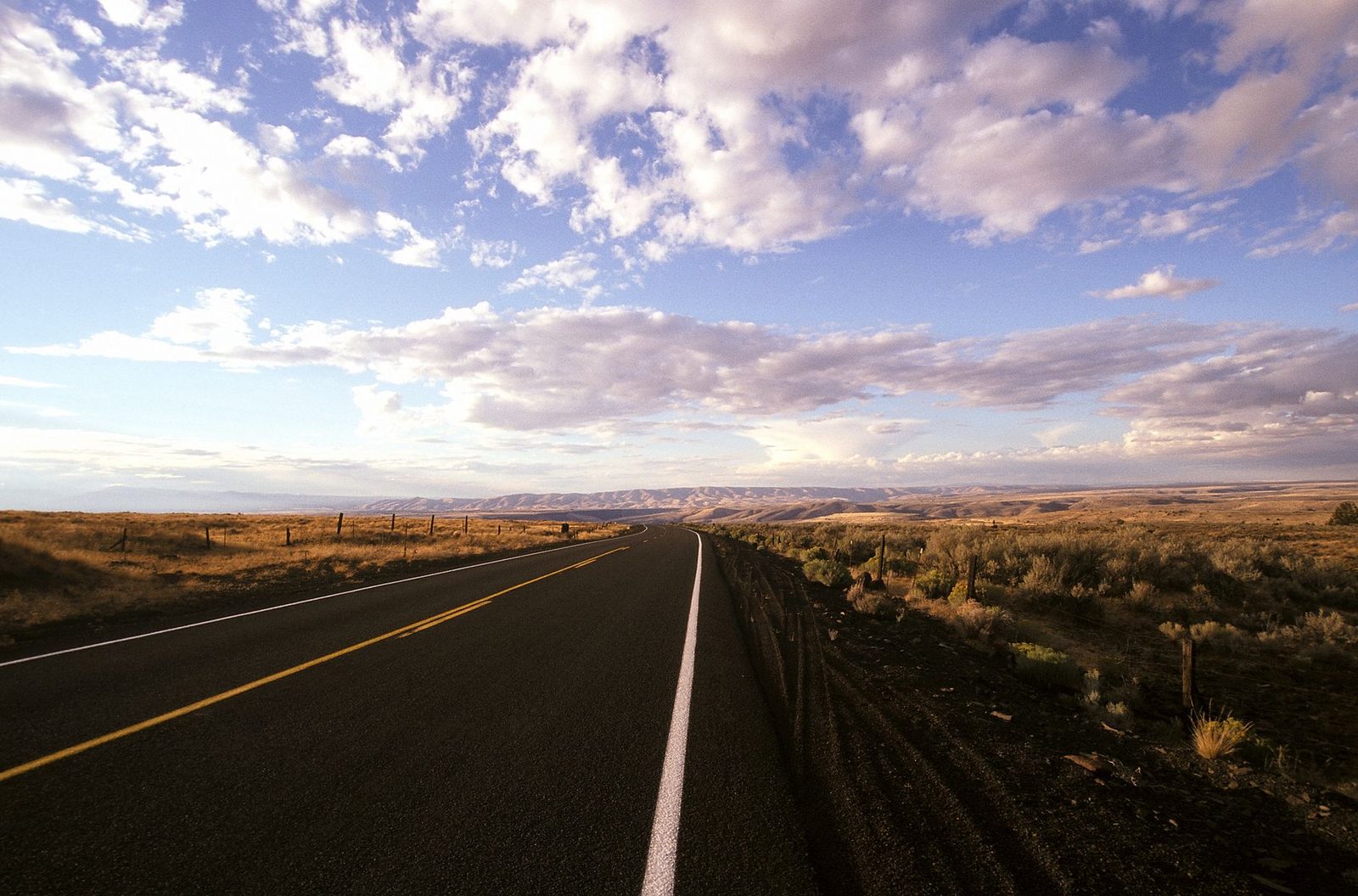
Owners letting property in Baker City are letting a piece of a nineteenth-century mining boom. The downtown is unusually grand for a town of ten thousand people, and the reason is gold. This page is the short version of how the buildings got here — useful context if you are writing a listing, and the reason guests come at all.
When was Baker City founded?
Baker City was platted in 1864, became the Baker County seat in 1868 and was incorporated in 1874. Its first mayor was Syrenus B. McCord, a blacksmith who became a hardware-store owner.
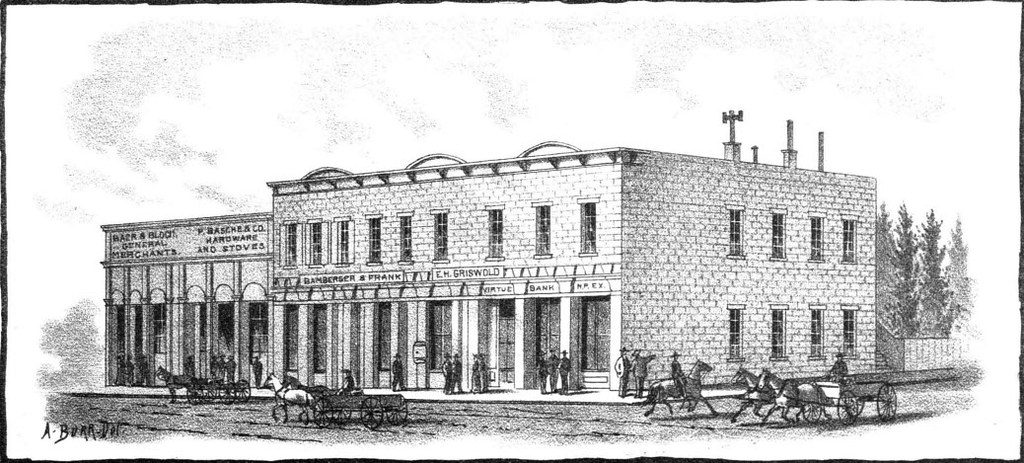
The town grew as the supply and banking centre for the gold country around it — the mines of the Blue Mountains, the camps that became ghost towns, and the ranching country of the Powder River valley. By the early 1900s the population was roughly 7,000; today it is about 10,000, which is why the commercial district can feel oversized for the town around it.
What did the Oregon Trail have to do with it?
Baker County contained one of the hardest stretches of the whole trail. When wagon trains started west in 1843, the first significant natural obstacle after entering the county was Burnt River Canyon, at its south-eastern corner.
Emigrants left the Snake River at Farewell Bend and turned up the narrow canyon, whose walls forced them into repeated crossings of the rocky riverbed or up onto steep hillsides. People and animals died there — animals of exhaustion and starvation, people of disease and accident. Beyond the canyon, north-west of Durkee, the route climbed a sagebrush ridge and the valley opened out. That crossing is still the reason a share of today's visitors are here.
Which historic buildings define the downtown?
The Geiser Grand Hotel is the landmark, alongside the Welcome Arch, the opera house and the surviving commercial blocks along Main Street.
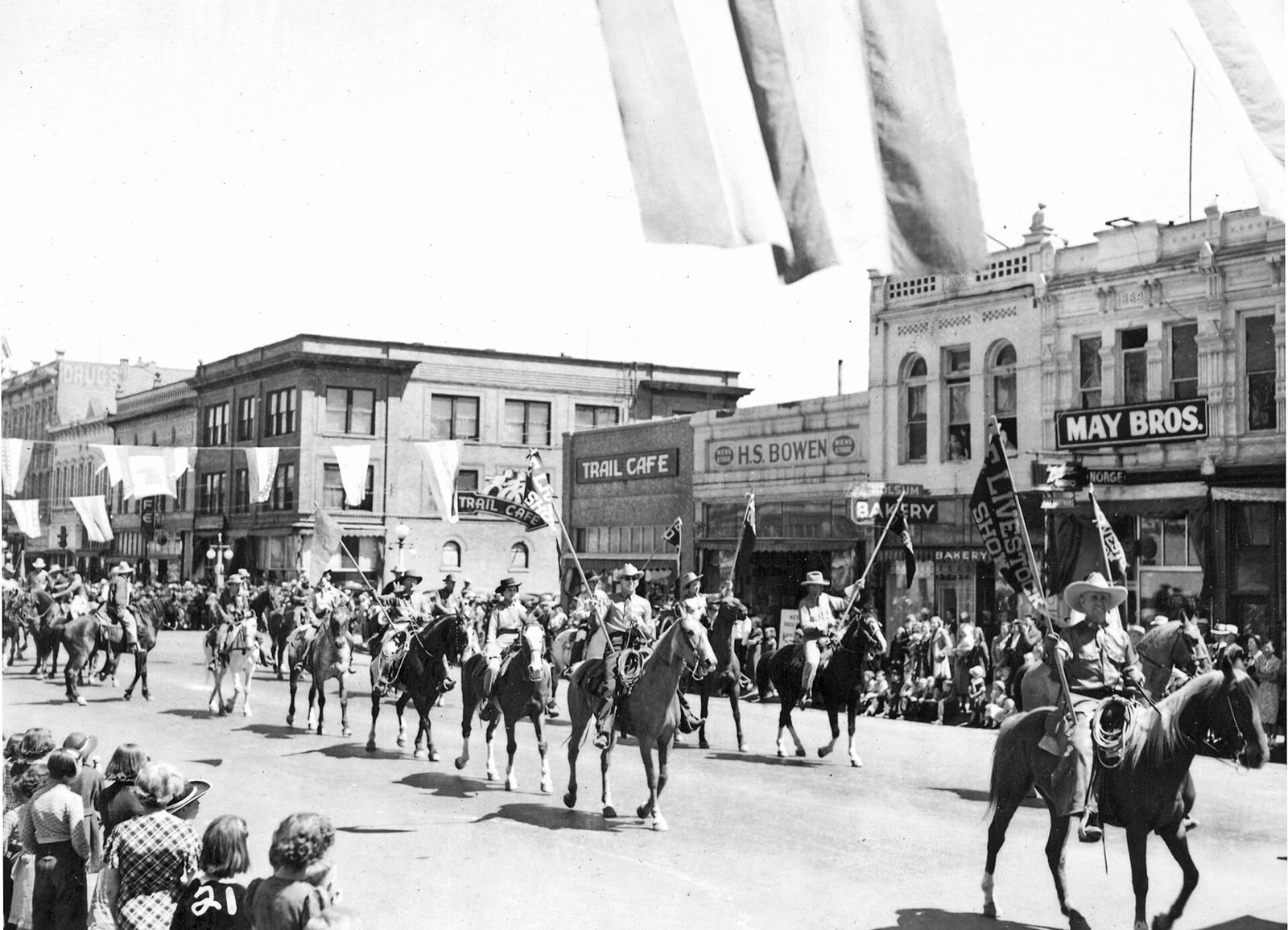
The Baker County Library's historic photograph collection records the district as it was: the Geiser Grand, the Baker City Welcome Arch, the opera house, the Packwood Hotel, the Red Front Stable, the Geddes & Pollman meat market. Most of the images in that collection are of buildings in the centre of the business district, which is exactly the stock that now carries the town's short-term letting.
- Geiser Grand Hotel — the surviving centrepiece of the boom-era downtown.
- Welcome Arch — long a symbol of the city's Main Street.
- Commercial blocks — brick and stone, upper floors now often residential.
- Ghost towns nearby — Sumpter and the mining camps around it.
Where does the town's photographic record come from?
From two private collections that ended up with the county library. The founding core came from O. H. P. McCord — Oliver Hazard Perry McCord, son of the first mayor — and the other major source was the Sumpter historian Brooks Hawley, who left the library his photograph collection and many historic records on his death.
The Baker County Library holds and publishes that collection, which runs to several thousand images across galleries covering Baker City itself, the small and ghost towns, the mines, transportation and the forest industry, people, schools, churches and organisations, and scenic, agricultural and military subjects. The photographs are the library's, and are credited to it — this page cites the collection as a source for the town's history and reproduces none of its images.
Why does any of this matter to a host?
Because it is the reason guests choose Baker City over a cheaper motel on the interstate. The trail, the gold country and an intact historic Main Street are the product; a listing that ignores them is competing on price alone.
Is this site connected to the library or a museum?
No. We are an independent review desk for property owners — see the notice for what that means and where to go for the actual archive.
What industries built Baker County?
Gold first, then ranching, timber and the transport that moved all three. The county library's photographic record is itself the evidence: after Baker City, the largest single subject in the collection is the mines.
The galleries break down into Baker City itself, the small towns and ghost towns, the mines, transportation and the forest industry, people with their schools, churches and organisations, and a final gallery of scenic, agricultural, military, fire-department, sports and music subjects. That is a fair portrait of what the county did: dig, ranch, cut timber, move goods, and build the institutions of a town that expected to keep growing.
- Mining — the reason the town exists and the money behind the downtown.
- Ranching and agriculture — the Powder River valley, then and now.
- Timber — the forest industry in the mountains west of town.
- Transportation — the trail, then the railroad, now Interstate 84.
What happened to the towns around it?
Many did not survive the end of the gold. The collection's second-largest gallery is small towns and ghost towns, which tells you how much of the county's settlement did not last.
Sumpter, west of Baker City, is the best-known survivor of that world — and it is also where much of the surviving record came from, through the historian Brooks Hawley. Guests staying in Baker City routinely drive out to the ghost towns and the dredge country, which is a good reason to put those routes in a welcome book rather than leaving people to find them.
Why is the downtown so grand for the population?
Because it was built for the town the boom expected, not the town that remained. The commercial district went up when Baker City was the supply and banking centre for a gold region, and the population has never grown into it.
That mismatch is why the place reads as it does today: three- and four-storey brick and stone blocks on a Main Street serving ten thousand people. For an owner it is a genuine asset. The building stock is more interesting than anything a modern development in a bigger market can offer, and it is the single most photographable thing about a listing here.
What can a guest actually see today?
An intact historic business district, trail interpretive sites, the Elkhorns and the mining country west of town. The downtown is the product; the rest is the day out.